Packaging Materials
Different products need different packaging materials. Learn about the main groups: plastic, glass, metal, paper and cardboard, wood, and petrochemical‑based materials.
Introduction
Different products need different packaging materials. The main groups of materials are plastic, glass, metal, paper and cardboard, wood, and petrochemical‑based materials. Each material has its own advantages, disadvantages, and typical uses.
Selecting the correct packaging material is one of the most critical decisions in product logistics. It impacts weight, cost, protection level, shelf life, and environmental sustainability.
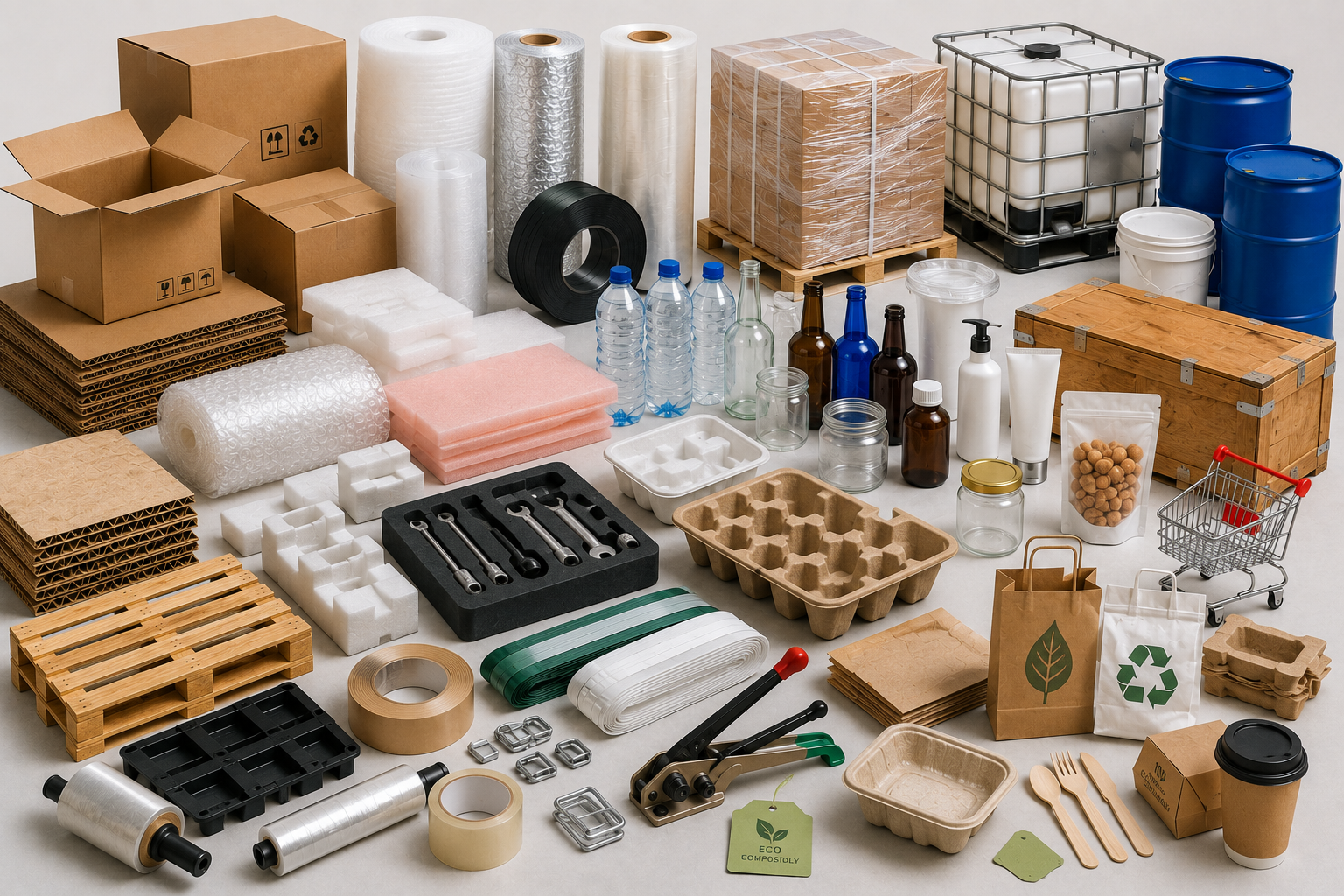
Plastic
Plastic is widely used in packaging because it is light, flexible, and can be made into many shapes. It is common in bottles, pouches, films, caps, trays, and foams.
- Advantages: low weight, low cost, good barrier properties, can be transparent or colored.
- Disadvantages: many plastics are difficult to recycle and can create long‑term environmental problems if not managed well.
- Common Uses: Toothpaste tubes, shampoo bottles, flexible food bags, stretch wrap, cushion foam.
Glass
Glass is strong, non‑reactive, and does not absorb smells or flavors. It is often used for food, beverages, cosmetics, and pharmaceuticals where purity and appearance are important.
- Advantages: excellent product protection, premium look, fully recyclable many times without quality loss.
- Disadvantages: heavy, breakable, and higher transport cost compared to plastic.
- Common Uses: Wine bottles, condiment jars, high-end perfume bottles, medical vials.
Metal
Metal packaging includes steel and aluminum cans, tins, and drums. It is used for food, drinks, aerosols, oils, and many industrial products.
- Advantages: very strong, good barrier to light and oxygen, long shelf life.
- Disadvantages: can be heavier and more expensive than some alternatives, may need special coatings inside.
- Common Uses: Beverage cans, steel drums, aerosol sprays, food tins.
Paper & Cardboard
Paper and cardboard are fiber‑based materials used for boxes, cartons, dividers, bags, and wrapping papers. They are common in retail, e‑commerce, and transport packaging.
- Advantages: easy to print, widely recycled, often made from renewable sources.
- Disadvantages: sensitive to water and moisture, usually needs extra protection for very heavy or wet products.
- Common Uses: Corrugated shipping boxes, liquid cartons, shopping bags, egg trays.
Wood
Wood is a natural, strong material used mainly for industrial and transport packaging. It is common in pallets, crates, boxes, and blocking and bracing inside large shipments.
- Advantages: high strength, good load‑bearing capacity, can be repaired, and often made from renewable sources.
- Disadvantages: heavier than many alternatives, can absorb moisture, may need treatment against insects or fungi, and quality can vary.
- Common Uses: wooden pallets, export crates, boxes for heavy machinery, internal supports and frames in large industrial shipments.
Petrochemical‑based Materials
Petrochemical‑based materials are plastics and foams made from oil and gas. They are widely used in packaging because they can be engineered to have specific strength, flexibility, and barrier properties.
- Advantages: very versatile, can be light yet strong, good protection against moisture and gases, and suitable for many shapes and production methods.
- Disadvantages: depend on fossil resources, can be difficult to recycle, and can create long‑lasting waste if not managed correctly.
- Common Uses: PE and PP films for shrink wrap and bags, EPS and EPE foams for cushioning, PET bottles, plastic caps and closures, and many types of protective inserts.
Packaging Materials – Simple Comparison Table
| Material | Main Advantage | Main Limitation |
|---|---|---|
| Plastic | Lightweight | Environmental concerns |
| Glass | Recyclable | Heavy and breakable |
| Metal | Strong protection | Higher cost |
| Paper/Cardboard | Sustainable | Sensitive to moisture |
| Wood | High strength | Heavy and sensitive to moisture |
| Petrochemical‑based | Very versatile | Environmental concerns |