Sustainable Packaging
Reduce environmental footprints, increase material circulation, and design out package waste.
Introduction
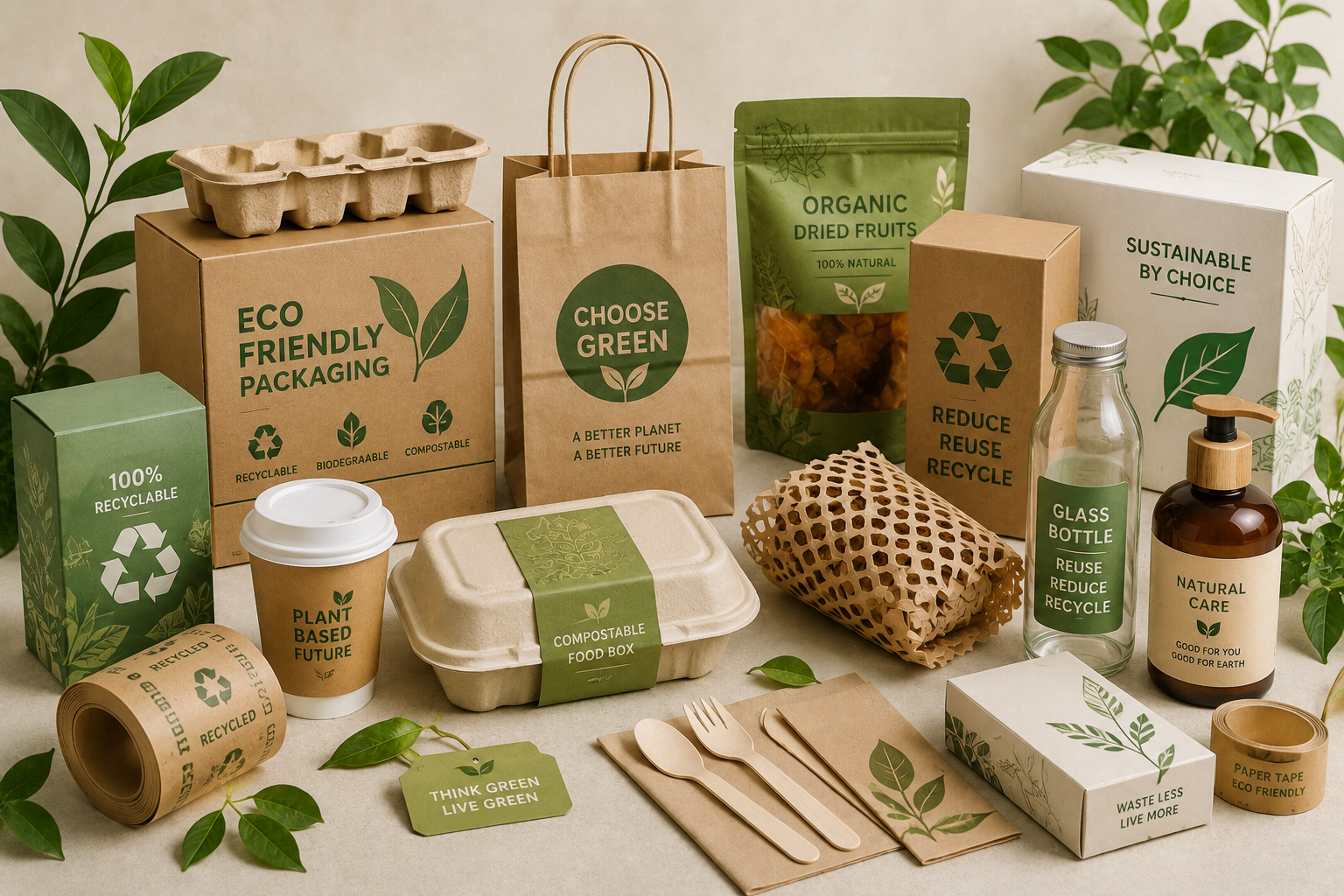
Sustainable packaging tries to reduce negative impact on the environment. The goal is to protect products well while using fewer resources, creating less waste, and making recycling or reuse easier.
It's not just about using natural materials, but looking at the entire supply chain from raw sourcing and manufacture emissions to transport weights and post-consumer waste sorting.
Recycling
Recyclable packaging can be collected and processed to make new materials. Common recyclable materials include many types of paper and cardboard, glass bottles and jars, metal cans, and some plastic bottles and trays. Clear recycling labels help customers know what to do after use.
Reusable Packaging
Reusable packaging is designed to be used many times before it is recycled or thrown away. Examples include refillable glass bottles, reusable plastic crates, and strong shopping bags. Reuse can reduce waste and lower the total amount of material needed over time.
Biodegradable & Compostable
Some packaging is made from materials that can break down naturally in the environment or in industrial composting systems. Examples include molded pulp trays and some plant‑based plastics. It is important to explain clearly under which conditions a material is really biodegradable or compostable.
Environmental Impact
The environmental impact of packaging depends on many factors: the raw material, the amount of material used, how far it is transported, how it is produced, and what happens after use. In many cases the best solution is to use only as much packaging as needed, design for recycling, and choose materials that fit the full life cycle of the product.